

Last Updated on July 10, 2026 by Adrienne Mathis
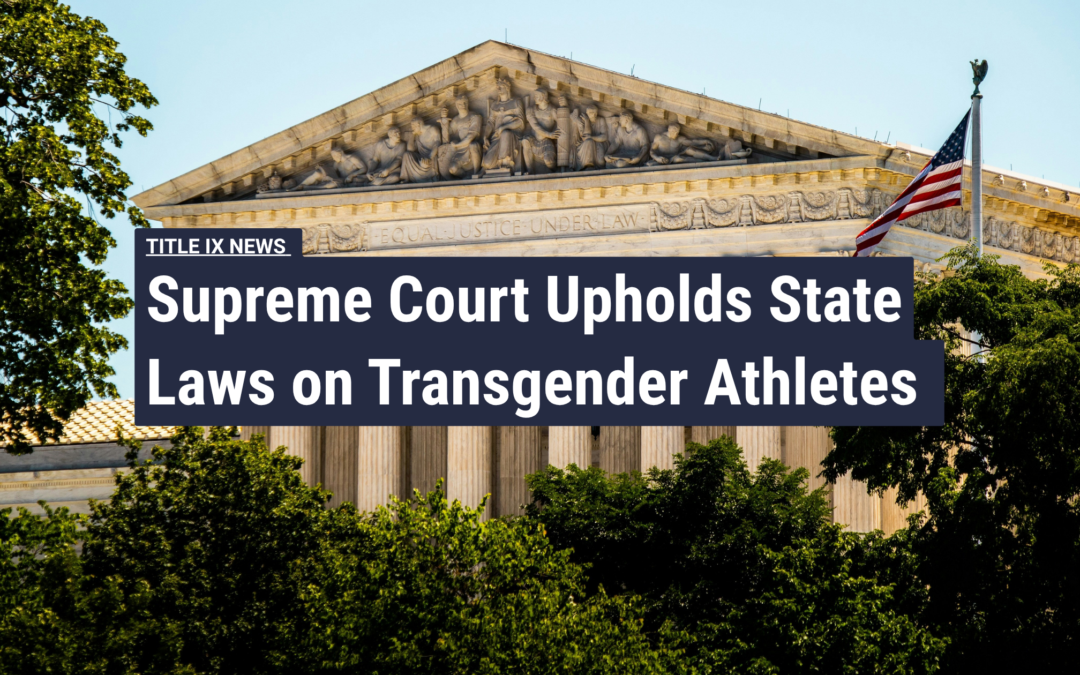
On June 30, 2026, the U.S. Supreme Court issued a decision upholding laws in Idaho and West Virginia that prohibit transgender girls and women from participating on girls’ and women’s school sports teams.
The laws define eligibility for girls’ and women’s teams based on biological sex and permit schools to maintain separate athletic teams for males and females on that basis. The Court held that these classifications do not violate Title IX or the Equal Protection Clause.
What the Supreme Court Decision Means for Title IX Professionals
The ruling does not create a nationwide standard for schools, nor does it settle the broader legal questions surrounding transgender students’ rights under Title IX.
For many colleges and universities, the immediate operational impact may be limited. Earlier this year, the NCAA revised its participation policy to prohibit transgender women from competing on women’s teams, and many institutions have already updated their athletic eligibility policies accordingly.
Institutions should consider:
- Reviewing athletic eligibility policies to ensure they align with applicable state law, NCAA requirements, and institutional policy.
- Updating, as needed, student-facing materials, athletics webpages, and internal guidance to reflect current athletic participation and eligibility policies.
- Monitoring future legal and regulatory developments, as this decision is limited to school athletics and does not resolve broader Title IX questions involving transgender students.
For additional coverage of the decision, read this article from Inside Higher Ed.
Updating Your Title IX Policies?
Legal and regulatory changes can prompt a deeper review of your Title IX policies and procedures. Our team can help you update existing policies or develop new ones.
Our Title IX Policy Audit & Development services include a comprehensive review of your existing policies, practical recommendations, and customized policy updates aligned with current legal and regulatory requirements.
Learn about our Title IX Policy Audit & Development services →