

Last Updated on October 6, 2026 by Adrienne Mathis
On July 10, 2026, the U.S. Department of Education announced a new national initiative focused on protecting K-12 students from sexual misconduct by adults in schools. Alongside the announcement, the Department issued a Dear Colleague Letter reminding elementary and secondary schools of their responsibilities under the current Title IX Regulations.
While the initiative does not create new Title IX requirements, it signals an unprecedented federal focus on ensuring that K-12 schools fulfill their responsibilities under the current Title IX Regulations.
As the Dear Colleague Letter states:
“Title IX and the Department’s implementing regulations require recipients of federal funds who have actual knowledge of sexual harassment by school employees or students to respond promptly and in a manner that is not deliberately indifferent. Failure to respond appropriately to known allegations of sexual harassment by school employees or students can violate Title IX.”
For K-12 schools, this signals the importance of reviewing what the current Title IX Regulations require and ensuring their district is prepared to carry them out when an employee learns of potential misconduct.
What the Department’s Initiative Means for K-12 Schools
The Dear Colleague Letter reinforces several existing Title IX responsibilities for K-12 schools:
- Respond promptly when the school has actual knowledge of sexual harassment.
- Follow the Title IX grievance process required under the current regulations.
- Ensure policies, procedures, and fully trained personnel are in place to carry out Title IX responsibilities.
What K-12 Schools Should Know About Title IX
1. A Report to Any Employee at a K-12 School Constitutes Actual Knowledge Under Title IX
Under the current Title IX Regulations, a report of sexual harassment made to any employee of an elementary or secondary school constitutes actual knowledge. Once a school has actual knowledge, it is required to respond promptly and in a manner that is not deliberately indifferent.
This means every employee should understand their reporting responsibilities and what to do when a report of sexual harassment is received.
2. Title IX Establishes a Structured Process for Resolving Complaints
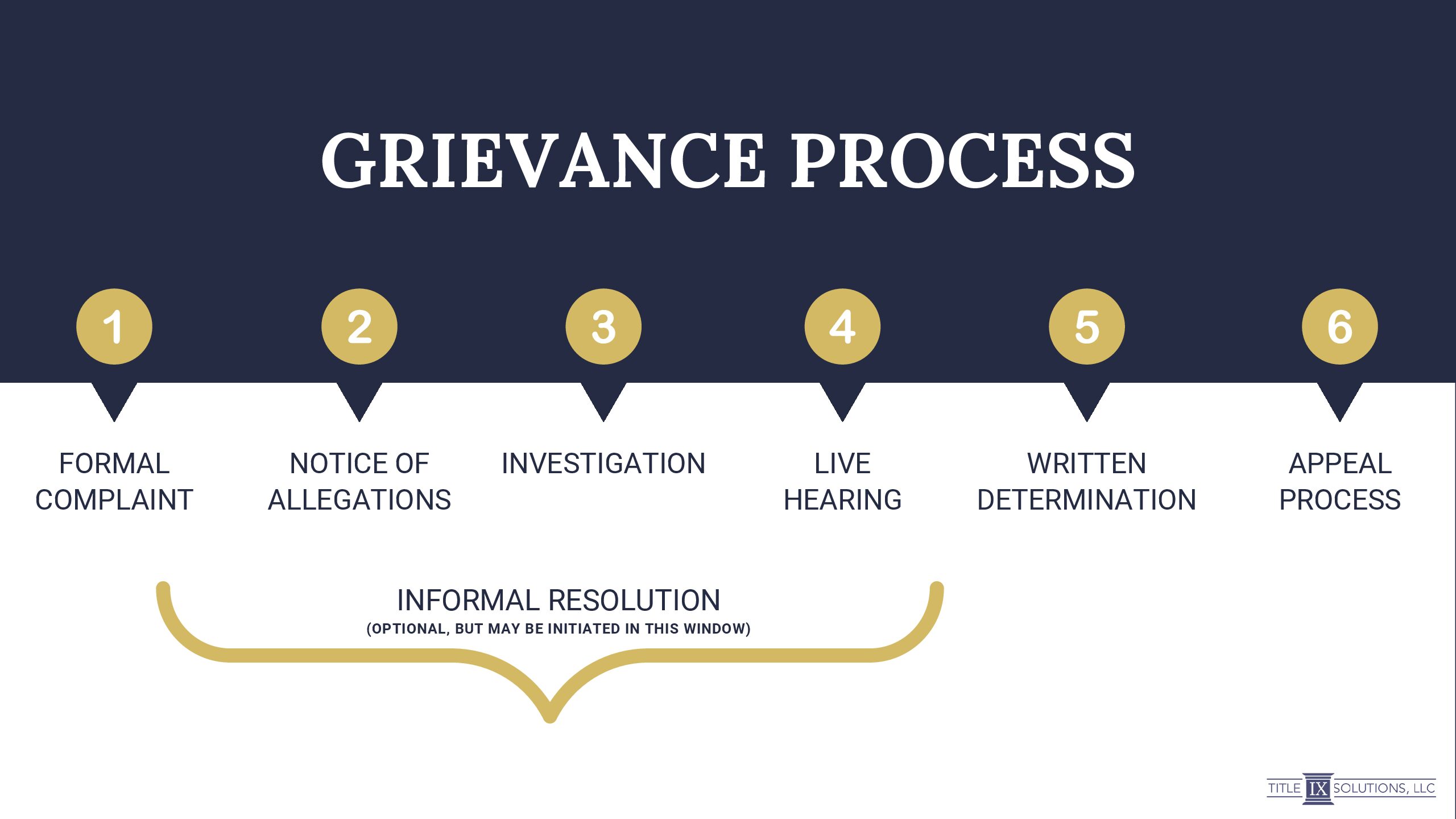
A report of sexual harassment may trigger a structured Title IX grievance process. The current regulations establish defined procedures for responding to reports, investigating allegations, determining responsibility, and resolving complaints.
3. Law Enforcement Involvement Does Not Replace or Postpone a School’s Title IX Responsibilities
The Dear Colleague Letter reiterates that a school’s obligations under Title IX continue regardless of whether law enforcement is involved. Referring a matter to police, or the existence of an on-going criminal investigation does not relieve a district of its responsibility to respond under the Title IX Regulations in a timely manner.
4. Title IX Establishes When Disciplinary Action May Be Taken
The current Title IX Regulations establish when disciplinary sanctions may be imposed. Schools may not discipline a respondent under Title IX unless and until the grievance process has concluded and the respondent has been found responsible.
5. Schools Need a Trained Title IX Team to Carry Out the Title IX Process
Schools should identify and prepare their Title IX team before a complaint is received. This includes training personnel to serve as Title IX Coordinators, investigators, decision-makers, advisors, and informal resolution facilitators who are ready to fulfill their responsibilities when a complaint arises.
Title IX Resources for K-12 Schools
Whether your district is reviewing its Title IX program, training staff, or expanding its Title IX team, our team is here to help.
Understand Title IX roles and training requirements
Read our Title IX Training Requirements & Best Practices article to learn more about the roles, responsibilities, and training that support an effective Title IX program.
Train your Title IX team
Explore our expert-led, role-specific training for Title IX Coordinators, investigators, decision-makers, advisors, informal resolution facilitators, and our comprehensive Title IX Sexual Harassment in K-12 Schools course.
Train all employees
Our All Employee Title IX Training helps faculty and staff recognize reports of sexual harassment, understand their reporting responsibilities, and know what to do when concerns are raised.
Review your policies and procedures
Our Policy Audits & Development services help districts evaluate and update Title IX policies to align with the current regulations.
Outsource key Title IX roles when needed
Whether your team is not yet fully trained or does not have the capacity to handle a high profile or complicated matter, our experienced Title IX practitioners can serve as investigators, decision-makers, advisors, informal resolution facilitators, and other members of your district’s Title IX team. We also provide Title IX Coordinator and Investigator mentorship for professionals who are new to the role or your team
Questions About Your District’s Title IX Program?
If you’re reviewing your Title IX policies, training plans, or team structure, we’re here to help. Schedule a meeting to discuss your district’s approach, ask questions, or identify next steps.